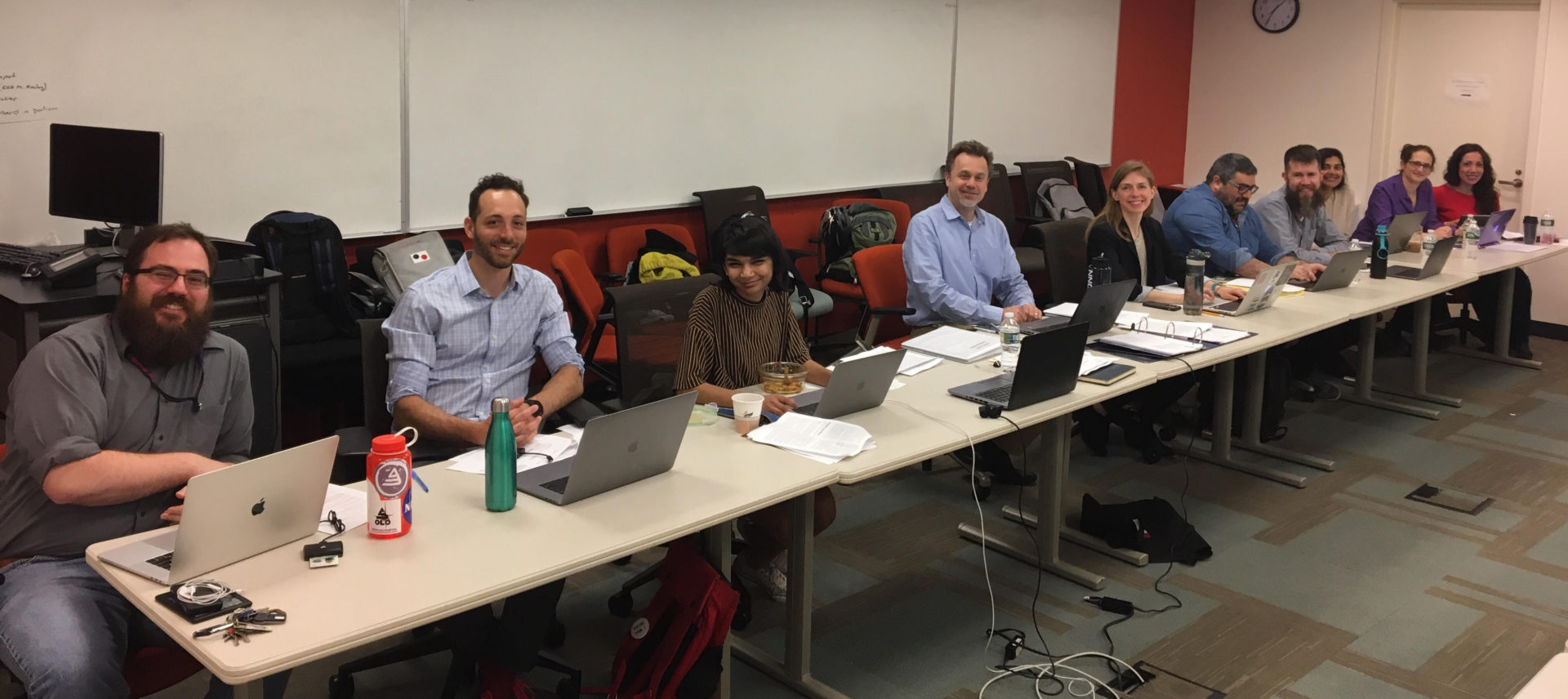
Thanks to the everyone who attended bargaining yesterday. Unfortunately, we had another challenging bargaining session with Columbia. We had further discussion about our concerns that the University proposal on Recognition could improperly exclude paid-direct Postdoctoral Research Fellows from coverage and rights under our contract. Our conversations on this topic have been frustrating in part because the University has repeatedly changed its position on the number of people they believe might be excluded under their proposal. Yesterday’s discussion became quite intense across the table. Unfortunately, rather than continue attempting to work through our differences, Columbia’s team chose to end our bargaining session one hour earlier than scheduled.
Prior to the discussion on Recognition, we spent more time on Discipline and Discharge, Employment Files and Leaves, which we hope ends up helping us ultimately reach fair agreements on those topics. For example, on Discipline and Discharge, where both the University and the Union proposals include “just cause” protections against arbitrary termination, we continued a discussion from our last session on other areas of difference in our positions. We also attempted to work through a few remaining differences around the nature and timing of researchers’ right to access and be assured of the contents of their Employment Files.
We still have more work to do on these proposals before reaching agreements and we were disappointed that the University chose to walk out on the session when it got particularly challenging as opposed to remaining committed to working through differences to reach a fair agreement.
We had a frustrating bargaining session yesterday. While we hoped to come closer to and/or reach tentative agreements on several contract articles, we made very little progress.
We spent much of our session discussing our Intellectual Property proposal. Our proposal aims to clarify that postdocs and Associate Research Scientist (PARs) have the same rights as other full-time researchers, including faculty, as well as create clear protections against retaliation for PARs who pursue complaints involving intellectual property or scholarly misconduct. The University unfortunately has refused to make a proposal on this topic and told us today they intend to have no language in our contract at all in this area. Columbia’s team attempted to argue that because this topic is related to the academic mission of the University the rights of PARs do not belong in an agreement covering employment conditions. Given the enormous contributions we make to the University’s research mission, as employees, we obviously disagree.
We also had further discussion of our Recognition, Employment Files, and Discipline and Discharge proposals. On Recognition, the university continues to propose language that we are concerned would unnecessarily exclude people who bring their own funding to Columbia who believe would appropriately be represented by the Union. We believe we came a little closer to agreement on Employment Files, but will need to keep working on this topic. Finally, in an effort to come closer together on Discipline and Discharge, we had a lengthy discussion aimed at understanding how the university currently handles potential discipline and discharge of PARs. We expect to have many more conversations on this article in coming sessions.
Frustrating sessions like yesterday show that to achieve a fair contract we will need to demonstrate to the University that we are valuable members of the research community and we deserve fair and equitable working conditions in our contract.
We had a short bargaining session yesterday, as well as a separate Health and Safety-focused bargaining subcommittee meeting at the end of last week. We are happy to report that we reached another tentative agreement yesterday on an article establishing fair workload protections. We spent most of our time yesterday discussing our proposals on Recognition, Employment Files, and Discipline and Discharge. While we did not reach agreement on those articles, or on our Health and Safety proposal, we believe we had constructive dialogue that will help us move forward. See below for a summary of these sessions.
Tentative agreement on Workload—We believe we reached agreement on a fair contract provision that establishes protections and an avenue of recourse against cases of abusive, arbitrary or unreasonable workload assigned by a supervisor, while also respecting the right of individual PARs to work as many hours on our projects as we choose.
Recognition—We are still working out some details on language. We want to make clear that the Union represents all the employees that were intended to be represented by our Union in the NLRB case and avoid any language that could open the door for some workers being inappropriately excluded. We hope to reach tentative agreement on this article soon.
Employment Files—While we have moved much closer to agreement on this article, the university still refuses to ensure the right for PARs to comment on information we believe is inaccurate in our employment files. This is a common provision in other postdoc union contracts.
Discipline and Discharge—While Columbia has agreed to the “just cause” standard, an important protection against arbitrary termination of position, we still have a number of differences in how to implement that standard most effectively under our contract.
Health and Safety—A subset of our respective bargaining committees met for a couple hours on Friday to discuss our Health and Safety proposals. We got to meet face-to-face with leadership of the University’s Environmental Health and Safety (EHS) office, learn about existing procedures at the university, hear their reactions to our initial bargaining proposal, and discuss possible ways to move toward agreement. We felt it was a productive meeting overall that will inform our next proposal to ensure that all PARs work in a safe, healthy environment and receive the training and equipment necessary to do so.
In our latest bargaining session Thursday, we spent most of our time discussing Columbia’s resistance to including protections against bullying in our contract. We also passed updated proposals on Recognition, Non-Discrimination and Grievance and Arbitration and the university’s team gave updated proposals on Leaves and Employment Files.
Bullying: CU says bullying protections would restrict P.I.s’ ability to mentor good researchers
The discussion regarding bullying was particularly frustrating. Even though members of their own bargaining team — as well as a growing number of observers of academic science, including Nature magazine — acknowledge bullying as a problem, Columbia so far is refusing to put language in our contract establishing protections against such destructive behavior. While we believe our proposed protections against “Power-Based Harassment” would enhance our ability to engage in quality research, the University team actually said on Thursday that such protections would put unreasonable restrictions on a PI’s ability to effectively mentor Postdocs and Associate Researchers and would thus undermine research.
The university team claimed that it would be impossible to clearly define bullying in the contract and that the lack of clarity would lead PIs to refrain from mentoring out of fear that PARs would abuse our ability to construe interactions with our PIs as “bullying.” While we would be happy to consider alternative definitions from the University, we find their outright rejection of our proposal thus far totally unacceptable — citing unsubstantiated and unreasonable claims that our proposal would hinder or inconvenience supervisors is not a legitimate reason to reject protections against the widely acknowledged problem of bullying in the academic workplace.
In other activity in our session, we passed an updated proposal on Recognition, attempting to clarify our mutual understanding that the small number of individuals who do research at Columbia, but who are in fact fully compensated and receive benefits from another employer (e.g. Howard Hughes Medical Institute) would not be part of our bargaining unit.
In response to concerns raised by the University, we also modified our Grievance and Arbitration article to define a grievance as a violation of the contract or other adverse action against any postdoc or Associate Research Scientist (PAR).
The university’s team gave us a few counter proposals as well, including updated versions of Employment Files and Leaves. While we believe we have moved closer to agreement on Employment Files, we have a long way to go to on paid leaves of absence. While they have agreed to outline the existing policies in the contract, which would make them clearer and more enforceable, Columbia’s team continues to refuse to offer any material improvement to critical aspects of leave. For example, they refuse to agree to improved paid parental leave, which remains one of the large institutional barriers to women and parents’ ability to advance in academia.
Yesterday, we had an eventful bargaining session with some progress and many updates. We are happy to report that we reached tentative agreement on three more contract articles (Training, Travel, and Workspace and Materials). The administration team also made its first significant — though still totally inadequate — change to its proposal on Non-Discrimination, showing they are at least trying to acknowledge the central importance of this issue to researchers at Columbia. In the most insulting development, the University team gave us a virtually meaningless compensation proposal that simply codifies the existing minimum salaries that leave us far behind the high cost of living and our colleagues at a growing number of competitor institutions in New York City. See further details below.
Making some progress with three more tentative agreements
First, the good news–we reached tentative agreement on three more contract articles: Training and Orientation; Travel; and Workspace and Materials.
The Training article ensures that, for any required or approved training or orientation, the University will pay any associated fees and will consider participation to be part of our regular work time. The Travel article ensures that PARs will receive advances or “timely reimbursement” for required work-related travel expenses–we believe having this provision in our contract will improve our ability to address delays in reimbursements under current practice. Lastly, the Workspace and Materials article commits the university to provide access to “facilities, equipment, materials, and access to the Internet and other network resources” necessary to do our work–a proposal that Columbia initially said it would refuse to include in our contract.
While we have many larger outstanding disputes, we are encouraged by our ability to reach agreement on some of the more basic contract provisions that enhance the rights of PARs in ways that are compatible with advancing the mission of the University.
A significant, but still totally inadequate, Columbia proposal on Non-Discrimination.
Nearly five months after our initial proposal, Columbia finally made a proposal that acknowledges the right of PARs to take a grievance on sexual harassment or discrimination to a neutral arbitrator. However, while we appreciate this important step in establishing rights to fair recourse, Columbia’s proposal remains mostly inadequate.
For example, their proposal would require a PAR to process a complaint through existing University non-discrimination procedures before initiating the union grievance process. This could lead to significant and totally unacceptable delays before a PAR could get a fair hearing from a neutral arbitrator because Columbia’s existing investigation procedures have no real deadlines. Columbia also continues to reject many of the other significant components of our proposal, such as protection against bullying, guaranteed interim measures to protect survivors from further harassment or discrimination during investigation of a grievance, and agreement to work jointly with the Union to improve training aimed at preventing bullying, harassment and discrimination. After a majority of PARs signed an open letter to Columbia demanding fair recourse, we are encouraged that Columbia has made a small improvement in its position, but we have a long way to go in order to reach agreement on this important topic.
A Compensation Proposal that would codify Columbia’s competitive disadvantage
Finally, Columbia’s team gave us an initial proposal on Compensation that simply reiterates the current University minimum salary rates for Postdoctoral Research Scientists, Postdoctoral Research Fellows, and Associate Research Scientists. Frankly, we are not even sure why the University gave us this proposal, as it offers no improvement to the status quo. As a majority of PARs have made clear throughout our campaign and in our bargaining surveys, Columbia needs to do significantly better when it comes to compensating us fairly for the world-class research we do at this University. Columbia’s minimum salaries lag significantly behind a growing number of New York City institutions that now pay Postdocs a minimum salary over $58,000. We know Columbia can do much better, and needs to do much better in order for us to work together to maintain our status as a magnet for attracting the best researchers from across the world.
We have several sessions coming up. If you would like to attend a session please RSVP to let us know in advance, as the locations are subject to change. Many PARs have attended bargaining sessions and found them illuminating to understand the process and the challenges we have ahead in order to win a fair first contract at Columbia.
In our latest bargaining session this week, another postdoc gave compelling testimonial about bullying, discrimination and harassment, we had constructive discussion on many of our outstanding proposals, and reached a tentative agreement on another contract article (Union-Management Committee).
We started with a testimonial from one of our postdoc colleagues about the impact and challenges of working in a hostile and disruptive lab environment at Columbia. The postdoc discussed how his P.I. had engaged in extensive bullying, manipulation, and intimidation of lab members. He described how the P.I. responded when one member of the lab filed a Title IX complaint against another lab member. The P.I. reacted with hostility toward the complainant and decided a few months later not to renew the complainant’s contract. The P.I.’s actions ultimately led several researchers to leave the group.
The postdoc reached out to various University offices about the abusive behaviors he had observed. Other than assurance that the situation would be investigated, the member was given no remedy. Ultimately, he found a position in another laboratory on his own. He closed his testimony by arguing for the importance of a neutral grievance procedure and clear definition of power-based harassment (i.e. bullying) in order to make it easier for researchers to raise and address these situations in a fair process with representation and advocacy from the Union.
After our colleague’s testimony, we signed a tentative agreement on an article establishing a Union-Management Committee that would ensure the Union and Columbia meet at least quarterly to discuss any issues that arise during the life of our contract. We then had further discussion and believe we came a little closer to reaching an agreement on our proposals regarding Training and Orientation, Travel, Work space and Materials, and Employment Files.
We also had more substantive discussion of our Vacation, Holidays and Leaves proposals. We continue to have the greatest differences around our proposal to expand PARs’ right to paid parental, family medical and other leaves of absence. Columbia made it very clear that they believe the status quo is more than sufficient and had no interest in changing the current leaves benefits. While we believe our proposals would make the university more inclusive and enable recruitment and retention of the best researchers regardless of background or family status, Columbia’s team so far has rigidly rejected any change to the status quo in this area. We expect to continue to discuss this important issue in future sessions.
We finished the bargaining session with a brief discussion of our Non-discrimination and Harassment proposal and our proposal to clarify “just cause” protections against arbitrary termination. It is clear that the numerous testimonials in bargaining and the open letter signed by a majority of PARs calling for real recourse has pressured Columbia at least start listening to our concerns on discrimination and harassment.
It is clear that it will take continued engagement and hard work from PARs all across campus to reach a fair agreement with Columbia.
Please RSVP for our Bargaining Update Town Halls to ask questions, hear an update about the progress we have made in bargaining and next steps on how to win a strong contract in bargaining with Columbia.
Since winning our union election last October by an overwhelming 68%, we have completed surveys from a majority of postdocs and associate researchers, democratically ratified our bargaining goals, elected a bargaining committee, and concluded our first eight bargaining sessions!
We are holding Town Hall meetings to answer questions about our progress in bargaining and discuss our strategy for winning a strong contract.
Thanks to all our colleagues who joined us at our lively bargaining session with Columbia on Monday. We spent most of this week’s session addressing Columbia’s concerns about our proposal for stronger protections against bullying, discrimination, and harassment, as well as explaining how short, insecure appointments and inefficient reappointment procedures can disrupt our ability to focus on our research. We exchanged a number of other proposals as well. See below for more details.
We began our session with one of our international researcher colleagues vividly describing the (unfortunately not uncommon) experience of working without pay due to Columbia’s bureaucratic delays in processing appointments. In this individual’s case, he arrived, along with his pregnant wife, to start work and had to pay rent and thousands of dollars in prenatal health care costs out-of-pocket for the first few months while receiving no income from Columbia. He further described the cost, stress, and disruption to his research caused by Columbia’s insistence on short-term appointments, requiring him to return to his home country annually to renew his visa and ensure that his wife was able to work. We hope that his story helped show Columbia that our proposals for longer appointments and flexibility on visa sponsorship would help us focus on research and make Columbia a more family-friendly and inclusive community of scholars.
After our colleague’s testimony, we had a lengthy discussion around our Non-Discrimination and Harassment proposal. Unfortunately, rather than engage in substantive discussion of the main principles behind our proposal, Columbia argued that we had either not read or not understood Columbia’s current policies on harassment, that PARs do not experience difficulties under the current system, that the option of a neutral third-party is unnecessary, and that Columbia is already “a national leader” in addressing sexual harassment – in spite of numerous high-profile cases of misconduct and the fact that strengthening current policies was one of the many reasons a majority of PARs voted for a union.
After hearing their objections, we made clear that stronger protections against discrimination and harassment was a major reason we formed a union and that we intend to continue this discussion until we reach an agreement on fair protections. We felt even more strongly about our proposal having just seen how contractual protections, support, and advocacy from her union helped UCLA postdoc Sandra Koch win her job back last week by pursuing a union grievance against pregnancy discrimination.
Next, we passed Columbia five updated counter-proposals on: Appointments and Reappointments, Training, Travel, Union-Management Committee, and Workspace and Materials. While their team continued to argue against longer appointment lengths, they acknowledged that there are issues related to reappointment and visa renewal that should be addressed. We also made a lot of progress on our Union-Management Committee proposal, which would establish a joint committee to help enforce the contract, and we expect to reach a tentative agreement on this at our next session. This is good news, and demonstrates that we are continuing to move forwards while identifying the areas on which we are still farther apart.
The University also passed us their first proposal on the subject of Discipline and Discharge, which included “just cause” protection against termination. While we have a number of other issues to work out in that article of the contract, it is an important step forward that Columbia agreed to include “just cause” as it protects researchers against arbitrary, unfair termination by a supervisor.
Overall, in the words of one postdoc who attended the bargaining session, it seemed as if Columbia’s team was not “feeling enough pressure” on the issues we discussed. While logical arguments and data are important aspects of the process, it was clear at this session that winning real recourse and protection against bullying, discrimination, and harassment, and more stable policies for international workers, will take the continued participation and action of postdocs and Associate Research Scientists across the university. Our next bargaining session will take place on June 20th.
In our seventh bargaining session, we presented the administration with our open letter signed by a majority of Postdocs and Associate Research Scientists, calling on Columbia to negotiate stronger protections and recourse against harassment and discrimination. Representatives from our union and the graduate worker union delivered the open letter to President Bollinger’s office earlier that afternoon. Check out our facebook post and like the page to receive similar updates.
We started out our bargaining session yesterday with a powerful testimony from one of our fellow Associate Research Scientists who talked about being bullied by her former PI over a seven year period and the lack of effective university policies to address her type of situation, especially for international researchers whose visas depend on their PI’s support.
She described a culture of bullying and abuse of power that took the form of expecting researchers to work 12-13 hour days and over the weekends, clear violations of intellectual property policies, belittling comments and deliberate undermining of the lab members, and extreme pressure to deliver results. Even after leaving the lab, she was excluded from authorship over her own work and faced retaliation when she attempted to use existing university procedures to seek recourse. The administration’s bargaining team acknowledged that strengthening protections against this kind of behavior was in the interest of everyone at the university.
During the session, we made four new proposals and continued to discuss several others. We made a lot of progress on some of our key non-economic issues, and reached our first tentative agreement with the university, on our Severability article. This is very exciting because it demonstrates that we are making progress towards a fair agreement with the University. The article ensures that if any part of the contract is invalidated by law, that the rest of the contract will remain in effect. Our four new proposals were: Non-Discrimination and Harassment, International Worker Rights and Protections, Intellectual Property and Scholarly Misconduct, and Health and Safety.
Our Non-Discrimination and Harassment proposal would state the university’s commitment to protect against all forms of discrimination and harassment, establish preventative measures, and provide recourse options in cases where these issues do take place.
Our International Workers Rights and Protections proposal would provide more support and transparency for international PARs in acquiring visas and protections against visa-renewal related costs.
Our Intellectual Property proposal would give PARs more rights and control over what happens with research that we produce.
Our Health and Safety proposal would ensure that PARs can address health concerns and maintain safe working environments.
The university also gave us a packet of their positions on various articles, which nevertheless did not address many of our most recent proposals and ignored substantial issues we raised in previous sessions. In our next bargaining sessions, we will continue to discuss these and other proposals as we move forward in negotiations.
Our next bargaining session will take place on June 10th. One member of our bargaining committee, Sonny Harman, will be leaving Columbia soon and will be replaced by our current Alternate, Ignacio Hernandez Morato. If you have any questions or would like to get more involved with the union please email columbiapostdocunion@gmail.com
We had our sixth bargaining session with the University’s bargaining team yesterday. We discussed several new proposals and had further discussion on a number of our previous proposals. While we have not yet reached agreement on any of our proposed contract articles, we did have productive dialogue on a number of topics and felt we made a little bit more progress toward finding common ground than in some of our previous sessions. See below for details.
We began by presenting new counter proposals on Vacation, Employment Files, and Job Postings. Our Employment Files proposal would provide recourse for a Postdocs or Associate Research Scientists (PAR) to access and review their employment file. Our Job Postings proposal would ensure that a diverse and qualified pool of candidates could apply for a positions, making the University more inclusive and competitive. Our Vacation proposal would entitle PARs to a well-defined and easily enforceable allotment of vacation time that cannot be dictated solely by the P.I. We still have differences to work out on each proposal, but yesterday’s discussions made us more hopeful of reaching fair agreements on Employment Files and Job Postings. Vacation may be more challenging because of how it connects to our ongoing discussion of paid leave for parents and other related reasons.
Columbia responded with counter proposals on Union Security and Holidays and proposed a new No-Strike No-Lockout clause. We were particularly encouraged by their proposal on Holidays, which moved beyond their previous way of making proposals that just referenced the Handbook, which would allow them to retain the ability to change the policy whenever they want. In their newest counter proposal, the University has specified actual dates, as well as defining personal days. They also included a provision we proposed, which would give PARs the right to take off an alternative day if required to work on a holiday. This is an important step forward in these discussions.
Their Union Security proposal would allow an open shop where everyone would receive the benefits of the contract without contributing financially to the cost of representation. This proposal would substantially weaken the power of our local union to bargain strong subsequent contracts and enforce our contract once it goes into effect.
The No-Strike No-Lockout clause is a standard clause in union contracts that would ensure that during the life of a contract, the University could not force PARs to stop working over a disagreement about the contract and unionized employees could not engage in strikes or work stoppages. It is typically accompanied by a robust Grievance and Arbitration provision, which would allow us to resolve any disputes through a neutral arbitrator if necessary instead of striking. We still have a long way to go to reach agreement on our grievance procedure proposal, and do not see how we can agree to a no-strike provision without such a strong enforcement mechanism also in our a contract.
Our next session is May 20th. If you have any questions or would like to get more involved with the union please email columbiapostdocunion@gmail.com


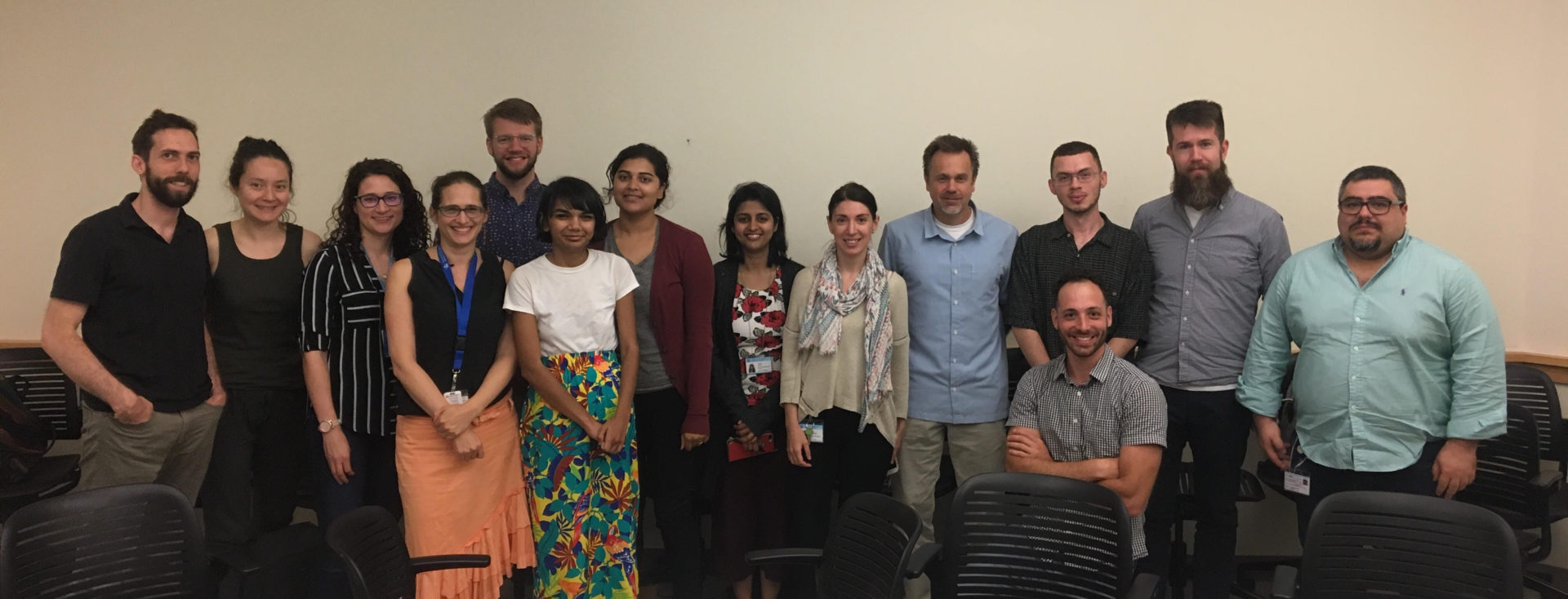
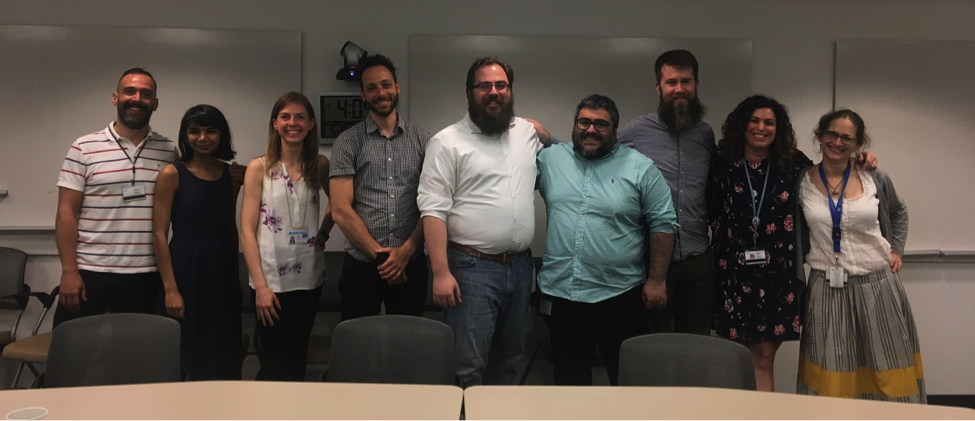 In our seventh bargaining session, we presented the administration with our open letter signed by a majority of Postdocs and Associate Research Scientists, calling on Columbia to negotiate stronger protections and recourse against harassment and discrimination. Representatives from our union and the graduate worker union delivered the open letter to President Bollinger’s office earlier that afternoon.