| The Columbia administration responded to some of our economic proposals in last Thursday’s session, including compensation, hardship support fund, and relocation assistance, while effectively rejecting our proposals on childcare, housing, leaves of absence and transportation. As a whole, their responses were utterly inadequate to address the economic challenge postdocs and ARS face, and on compensation were a major step backward from what we have previously established in our agreements. Our bargaining committee provided counterproposals on non-economic articles including Appointments, International Employees, Non-Discrimination, and Union Rights & Access. In the session, we spent much of the time discussing changes we made to these proposals to address concerns they had previously raised.
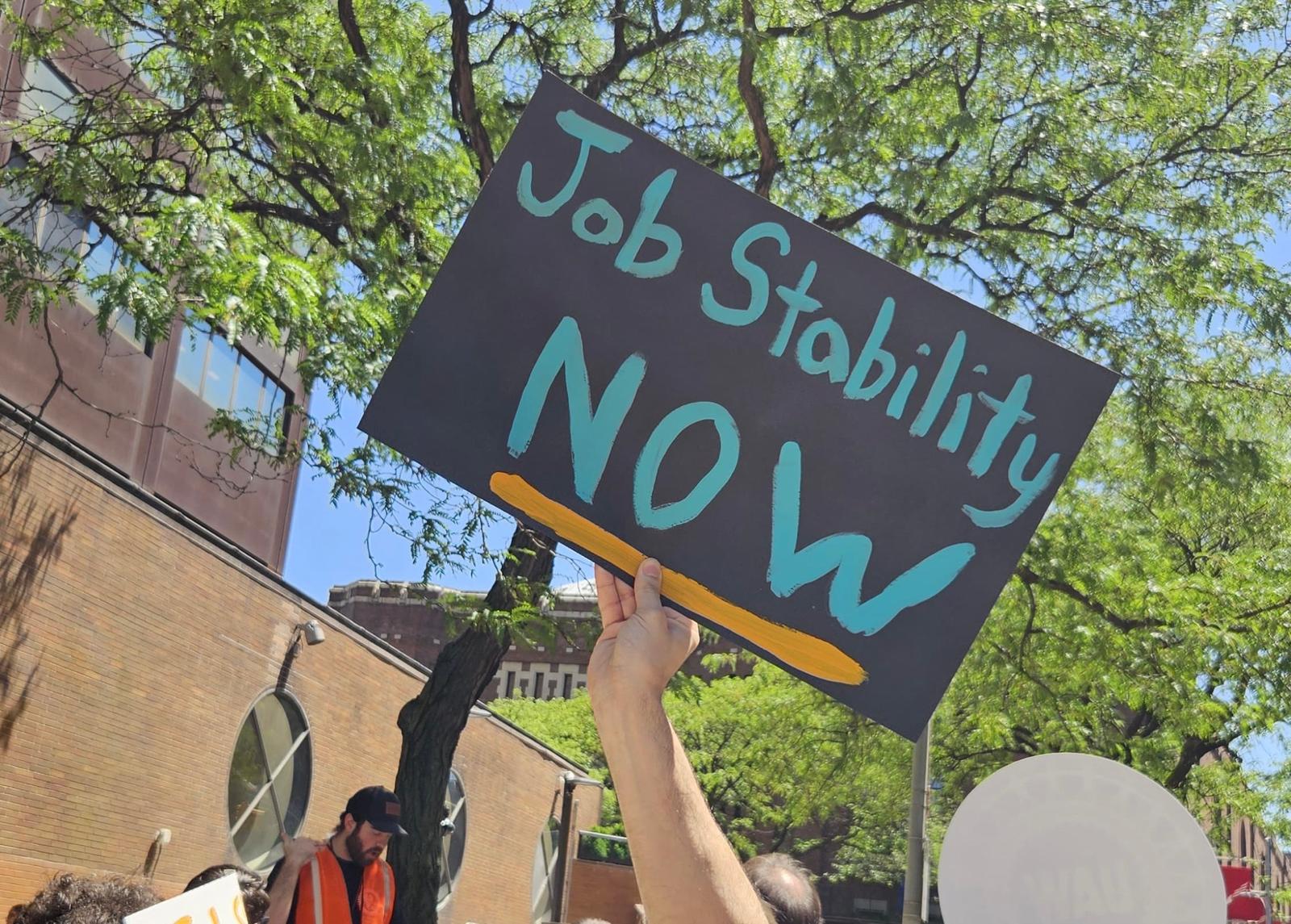
It’s clear we need to keep the pressure up on Columbia to win both the non-economic and economic improvements we deserve, as Columbia’s proposals suggest they are not yet serious about finding solutions to some of the major crises facing researchers. RSVP here for our next scheduled bargaining session and click here to sign our job security petition if you haven’t yet.
Join us at the bargaining table:
📍 Studebaker 469
📅 Thursday, May 28
🕛 12:00 PM
Here are some of some details on economic counter proposals Columbia put on the table:
- Compensation: Columbia proposed to freeze first year postdoc and ARS minimums, eliminate one-time salary adjustments based on experience, and to cut anniversary raises from 3% to 2%. At a time when the cost of living in New York City continues to outpace inflation adjustments across the board, Columbia is proposing to give us less, not more.
- Hardship Support Fund: Columbia proposed to increase the hardship fund from $500,000 to $575,000 – a 15% increase to a fund that is already insufficient for a unit of our size as we saw when we exhausted the fund six months ago. They also proposed language intended to respond to our Immigration Support Fund proposal by broadening qualifying expenses in the Hardship Support Fund.
- Relocation Payment: Columbia proposed a $250 increase to the one-time payment for newly hired employees, while removing “relocation” from the name of the side letter.
Columbia effectively rejected four articles that address some of the most pressing concerns our members face:
- Childcare
- Housing
- Transit
- Leaves of Absence
What we brought to the table
In contrast, here are details of what we presented:
On Appointments, we reasserted our demand for 12-month minimum appointments and reappointments. Short-term contracts create enormous instability: financial, personal, and professional. Columbia’s response was to cite the need for “institutional flexibility”, meaning the University wants to retain the ability to unilaterally give postdocs short contracts. To illustrate what that actually looks like, Sergey Pampou, an ARS from Systems Biology, shared his experience of navigating a 3-month appointment and the financial stress and uncertainty of the period, including the impossibility of planning his future. This is not flexibility, it’s precarity.
We also reasserted our position that postdoctoral fellows must not be classified as independent contractors for tax purposes. This classification strips fellows of benefits that every other member of the unit receives and Tess Forrest, a postdoc in the Department of Psychology, walked the room through exactly what that means in practice: lost benefits not just during employment at Columbia, but lasting consequences that follow fellows into their future careers. This is not a technicality, it is a material harm that Columbia has the power to solve at the bargaining table.
On International Employees, we proposed that postdocs be able to request premium visa processing when delays threaten their employment and that such requests should not be unreasonably denied. We reasserted the need for 15 days of paid time off for visa renewal against Columbia’s current offer of 2 days as well as a higher reimbursement amount for visa renewal costs, all grounded in data and testimonials from international members of our unit. We replaced our original language on immigration safety with language directly tied to the University’s existing Public Safety protocols in an effort to reach workable language around immigration protections for researchers.
On Non-Discrimination, we reasserted that our need to grieve harassment and bullying cases is essential for securing swift and effective interim measures for postdocs/ARS who are experiencing any form of harassment. We accepted the additional protected categories the University proposed and reasserted categories present in our current contract that were left out of the University’s recent counterproposal. We also proposed the University’s current working definition of bullying, which our members gave significant input into in 2022-23, in place of the website link referencing the definition. Finally, we accepted the University’s proposed change that leaves it to the discretion of the employee to notify the Union regarding cases involving Title IX.
On Union Access, Rights, & Activity, we proposed that union representatives be given 20 minutes to present at OPA orientations in order to inform new postdocs of the contract and their rights, which is the status quo practice. We reasserted our proposal for Columbia to include demographic and personal contact information in the monthly bargaining unit list, while removing one item. We cannot effectively represent a unit we cannot fully reach.
What are the next steps?
Columbia’s proposals suggest they are not yet ready to bargain seriously on compensation, benefits, or the quality-of-life issues that define whether Columbia is a place where postdocs and research can thrive. The gap between what they are offering and the needs of postdocs and ARS remains wide.
The most important thing postdocs and ARS can do right now is stay engaged, talk to our colleagues, and get involved in the campaign. Columbia needs to understand that researchers are paying attention and will not accept a contract that leaves us behind.
In solidarity,
Ankit Roy, Biological Sciences
CPW-UAW Local 4100 Bargaining Committee |